How to Plan Your Next Shot in Pool: Easy Tips to Think Ahead

Quick answer: To plan your next shot in pool, decide where you want the cue ball to stop before you shoot the ball in front of you. Look at the next ball you want to shoot, picture a spot that gives you an easy angle on it, and then choose the speed and spin that will send the cue ball there. Keep it simple: use as little spin as you can and leave yourself a small angle, not a perfectly straight shot. Thinking one ball ahead is the first step to running more balls.
How to plan your next shot in pool: a player studying the pool table layout before taking a shot
How to plan your next shot in pool: think one ball ahead before every shot.

Many beginners just make the ball in front of them and hope for the best. Planning the next shot turns hoping into a plan.

Step 1: Look Before You Shoot

Walk around the table and look at where every ball is. Ask yourself:

  • Which ball do I want to shoot next?
  • Which balls are in the way?
  • Which pockets are open?

Step 2: Pick a Landing Spot

Choose an area, not an exact dot, where the cue ball should stop. A big target is easier to hit than a tiny one.

Step 3: Leave a Small Angle

A small angle on your next shot is often better than a dead straight one. With a slight angle, you can send the cue ball to the next spot more easily. Straight shots make it harder to move the cue ball sideways.

Step 4: Choose Speed First

Speed is the biggest part of position. A soft or medium speed is easier to control than a hard hit. Practice so you know how far the cue ball rolls with different strokes.

Step 5: Add Spin Only When Needed

Spin What it does
Follow Cue ball rolls forward after contact
Draw Cue ball comes back toward you
Stun Cue ball stops or slides sideways
Sidespin Changes the angle off a rail

Start with a center hit when you can. Our post on how to draw the cue ball and our page on how to use sidespin in pool explain spin more.

Common Traps to Avoid

  • Scratching. Check if the cue ball’s path goes near a pocket.
  • Getting stuck on a rail. Frozen to a rail makes the next shot harder.
  • Hitting other balls. Know where the cue ball will travel.
  • Going too far. Hitting too hard is a common reason for bad position.

A Simple Practice Drill

  1. Put three balls on the table in easy spots.
  2. Before each shot, say out loud where you want the cue ball to stop.
  3. Shoot and see how close you got.
  4. Repeat until you can run all three.

This is a great way to build the habit of planning. A steady center hit helps too. See our page on how to hit the cue ball in the center.

Think About the Whole Rack

As you get better, think two or three balls ahead. Look for problem balls, like two balls touching or a ball on a rail, and plan when to handle them. Our page on how to aim in pool for beginners covers the aiming side.

A Quick Pre Shot Routine

Step Ask yourself
1 Which ball is next?
2 Where should the cue ball stop?
3 What speed gets it there?
4 Do I need spin, or will center ball work?
5 Is there a scratch or a blocker in the path?

The Bottom Line

To plan your next shot in pool, look at the table, pick a landing area for the cue ball, leave a small angle, and control your speed. Use spin only when you need it. Practice saying your plan before each shot, and you will start running more balls.

Keep Reading on This Site

Frequently Asked Questions

What does playing position mean in pool?

It means controlling where the cue ball stops so your next shot is easy.

Should I leave myself a straight shot?

Often a small angle is better, because it makes it easier to move the cue ball to the next spot.

What matters most for position play?

Speed control is usually the biggest part.

How far ahead should beginners plan?

Start by planning one ball ahead, then work up to two or three.

Ready to plan a whole rack? See how to run out in 8 ball.
How to Break in Pool: A Simple Guide for a Better Break

Quick answer: To break in pool, start with a tight rack. Place the cue ball behind the head string, often a little off center. Use a solid bridge and a relaxed grip. Hit the cue ball near center or slightly below and drive it into the head ball as full as you can. Use controlled power, not all out power, and keep your body balanced. A good break spreads the balls and leaves the cue ball near the middle of the table.

How to break in pool: a player striking the cue ball into a full rack of balls on a pool table
How to break in pool: a square, solid hit on the head ball beats wild power.

The break starts every rack. A better break gives you more shots and better chances to run out.

Step 1: Get a Tight Rack

A loose rack makes a weak break. Make sure the balls touch each other. On many tables, the person who racks matters, so check your rack or watch it closely.

Step 2: Place the Cue Ball

Put the cue ball behind the head string. Many players break from close to the center for 8 ball, or from near a side rail. Try different spots and see what works on your table. Always follow the rules where you play.

Step 3: Use a Solid Bridge

The break uses more power, so your bridge must be firm. A closed bridge or a firm open bridge both work. Plant your bridge hand so it does not move.

Step 4: Stance and Grip

  • Stand a little taller than normal if it helps balance.
  • Keep a relaxed grip. A tight grip slows the cue.
  • Stay balanced so you do not fall forward.

Step 5: Aim for a Full Hit

The most important part is hitting the head ball square. A full hit sends the energy into the rack. A thin hit wastes it.

Step 6: Use Controlled Power

More power is not always better. Many players find they break better a little below their top speed, because they can hit more squarely. Speed you cannot control often leads to misses and scratches.

Step 7: Control the Cue Ball

Try to leave the cue ball near the middle of the table. Hitting near center or slightly below can help stop the cue ball after it hits the rack. Hitting too high can send the cue ball flying, sometimes off the table.

Common Break Mistakes

Mistake Fix
Loose rack Check and tighten the rack
Moving bridge hand Plant the bridge firmly
Too much power Use controlled speed
Thin hit on head ball Focus on a square hit
Cue ball scratches Hit near center or slightly below

Break Drills

  1. Break 10 racks in a row.
  2. Count how many balls drop each time.
  3. Note where the cue ball ends up.
  4. Try a new cue ball spot and compare.

Our post on pool drills for beginners has more practice ideas.

Does the Game Change the Break?

Yes. In 8 ball, players often aim for a powerful break that spreads the balls. In 9 ball, many players look for a controlled break that makes a ball and leaves a shot at the 1. Our sister site has a page on how to break in 9 ball.

A Word on Break Cues

Some players use a separate break cue with a hard tip, so they do not wear down their playing cue tip. A break cue is not required, but many players like one.

The Bottom Line

To break in pool, use a tight rack, a firm bridge, and a relaxed grip. Hit the head ball as full as you can with controlled power, and try to keep the cue ball near the middle. Practice your break and track your results to see what works best.

Keep Reading on This Site

Frequently Asked Questions

Where should I place the cue ball on the break?

Behind the head string, often near center or near a side rail. Try spots to see what works.

Should I break as hard as I can?

Usually no. Controlled power with a square hit often works better.

Why does my cue ball scratch on the break?

Hitting too high or hitting the head ball off center can send the cue ball into a pocket.

Do I need a break cue?

No, but many players like one so they do not wear out their playing cue tip.

Playing 8 ball? Read my 8 ball break tips.

How to Bank a Ball in Pool: 7 Steps for Beginners

Quick answer: To bank a ball in pool, picture the rail as a mirror. Find the point on the rail halfway between the object ball and the pocket, then hit the object ball so it heads to that point. Use medium speed and center ball on the cue ball. Hitting harder often makes the ball come off the rail at a shorter angle, so practice to learn how your table plays.

How to bank a ball in pool: an object ball bouncing off a cushion toward the opposite corner pocket
How to bank a ball in pool: find the mirror point on the rail and use medium speed.

Bank shots look hard, but they follow simple patterns. Once you learn the basics, you will start seeing banks as real options.

What Is a Bank Shot?

A bank shot is when the object ball hits a rail before going into a pocket. Banks are useful when a direct shot is blocked or when the angle is better off a rail.

Step 1: Pick the Pocket

Choose the pocket on the far side of the rail. Cross corner and cross side banks are the most common.

Step 2: Use the Mirror Method

Imagine the rail is a mirror. For a simple bank:

  1. Find where the object ball is.
  2. Find the target pocket.
  3. Find the spot on the rail halfway between them, measured along the rail.

The diamonds on the rail help you find that spot.

Step 3: Aim the Object Ball at the Rail Spot

Figure out how to cut the object ball so it heads toward that spot on the rail. It is like aiming a normal cut shot, but your target is a point on the rail instead of a pocket.

Step 4: Use Medium Speed

Speed matters on banks.

Speed Effect
Soft Ball may come off a bit longer
Medium Closest to the mirror line
Hard Ball often comes off shorter

Start at medium speed while learning.

Step 5: Hit Center Ball

Sidespin on the cue ball can change how the object ball comes off the rail. Keep it simple with center ball.

Step 6: Watch for Kiss

Make sure the cue ball and object ball will not hit each other again after the object ball comes off the rail. This is called a kiss or double kiss, and it is common on straight on banks.

Step 7: Stay Down

Stay still through the shot. Jumping up is a common reason banks miss.

Bank Drills

  1. Cross side drill. Place a ball one diamond off a long rail, near the side pocket. Bank it into the opposite side pocket.
  2. Cross corner drill. Place a ball near the side pocket on a long rail. Bank it into the opposite corner.
  3. Speed test. Shoot the same bank at three speeds and note where the ball hits.

Take notes so you learn your table.

Common Mistakes

Mistake Fix
Hitting too hard Use medium speed
Using English Start with center ball
Ignoring the kiss Check the cue ball’s path
Jumping up Stay down until the ball stops

When to Bank

  • When the direct shot is blocked
  • When the bank is easier than a thin cut
  • When missing the bank leaves your opponent a hard shot

Learn From Every Miss

When you miss a bank, look at where the ball hit the rail and where it ended up. Did it come off too long or too short? Was it the speed or your aim? Set it up again and try once more. Each miss gives you a clue.

The Bottom Line

To bank a ball in pool, picture the rail as a mirror, aim at the halfway point, use medium speed and center ball, and watch for the kiss. Practice simple banks often and you will start making them with confidence.

Keep Reading on This Site

Frequently Asked Questions

How do you aim a bank shot in pool?

Use the mirror method. Aim at the rail point halfway between the object ball and the pocket.

Should I hit a bank shot hard?

Medium speed is best while learning. Hard shots often come off the rail at a shorter angle.

What is a kiss on a bank shot?

A kiss is when the cue ball and object ball touch again after the bank, which can knock the ball off line.

Should I use English on bank shots?

Start with center ball. English changes how the ball comes off the rail.

How to Draw the Cue Ball: 7 Tips for a Better Draw Shot in Pool

Quick answer: To draw the cue ball, hit it below center with a smooth, level stroke and follow through. Hitting low puts backspin on the cue ball. When it hits the object ball, that backspin makes the cue ball roll back toward you. Keep your bridge low, chalk your tip, stay down, and do not jab at the ball. Start with short, straight shots and slowly move the balls farther apart.

How to draw the cue ball: a cue tip lined up below center on the cue ball, with an arrow showing the cue ball rolling backward after contact
How to draw the cue ball: hit below center with a smooth stroke and follow through.

The draw shot is one of the three basic shots in pool, along with the stop shot and the follow shot. It lets you pull the cue ball back after you make a ball. That gives you much more control over where you end up for your next shot.

What Is a Draw Shot?

A draw shot is when the cue ball spins backward and comes back toward you after hitting the object ball. You create it by hitting the cue ball below its center. The backspin is still on the ball when it reaches the object ball, so it pulls back.

7 Tips for a Better Draw Shot

1. Hit Below Center

Aim your cue tip below the middle of the cue ball. Start about one tip width below center. Going too low can cause a miscue, where the tip slides off the ball.

2. Chalk Your Tip

A draw shot needs good grip between the tip and the cue ball. Chalk before every draw shot. Many miscues happen with a dry tip.

3. Lower Your Bridge

To hit low, your bridge hand needs to be lower too. Flatten your bridge so the cue is close to level. If you raise the back of the cue, you will be hitting down on the ball, which can make it jump or curve.

4. Keep the Cue Level

Try to keep the cue as level as you can. A level cue sends the spin straight back. A tilted cue can make the cue ball swerve.

5. Use a Smooth Stroke

Many beginners try to jab or punch the draw shot. That usually makes the cue ball stop or slide instead of coming back. Use a smooth, relaxed stroke and let the cue do the work.

6. Follow Through

Follow through after you hit the cue ball. Let your cue keep moving forward a few inches past where the cue ball was. A short follow through often means less draw.

7. Stay Down

Keep your head and body still until the cue ball comes back. Jumping up during the stroke is one of the most common reasons a draw shot fails.

Why Is My Draw Shot Not Working?

Problem Likely Cause Try This
Cue ball stops instead of drawing Not hitting low enough, or jabbing Hit lower and follow through
Miscue Dry tip or hitting too low Chalk and move up a little
Cue ball jumps Back of the cue raised Lower the back hand, level the cue
Draw dies on long shots Spin wears off over distance Use more speed or a shorter shot

Draw Shot Drills

Short Straight Draw

Place the object ball about one foot from a corner pocket. Put the cue ball about one foot behind it, straight in. Try to make the ball and draw the cue ball back six inches. Then try one foot, then two feet.

Move It Back

Once you can draw on short shots, move the cue ball farther away from the object ball. Draw is harder the farther the cue ball has to travel, because the backspin wears off as it rolls.

Draw to a Target

Put a piece of chalk or a coin on the table behind the cue ball. Try to draw the cue ball back to it. This builds control, not just power.

Stop, Draw, and Follow

The draw shot works best when you also know the stop shot and the follow shot. A stop shot hits a little below center so the cue ball stops dead. A follow shot hits above center so the cue ball rolls forward. See our post on how to do a stop shot in pool to learn that one too.

Watch the Lesson

The video below shows the stop shot, the draw shot, and the follow shot, so you can see where the tip hits the cue ball for each one.

Practice your draw a few minutes every session. Over time you will feel how low to hit and how hard to stroke for the distance you want.

Watch: How to Play Billiards: Stop, Draw and Follow (3 Basic Shots) | Pool Skool

Keep Reading on This Site

Frequently Asked Questions

Where do you hit the cue ball to draw it back?

Below center. Start about one tip width below the middle of the cue ball.

Why does my cue ball stop instead of draw?

You may not be hitting low enough, or you may be jabbing instead of following through.

How do you draw the cue ball without miscuing?

Chalk your tip, do not go too low, and keep the cue as level as you can.

Why is draw harder on long shots?

The backspin wears off as the cue ball rolls, so less spin is left when it reaches the object ball.

How to Improve Your Pool Stroke: 7 Tips for a Smooth, Straight Stroke

Quick answer: A good pool stroke is smooth, straight, and relaxed. To improve yours, hold the cue loosely, swing from the elbow like a pendulum while your upper arm stays still, pause briefly at the back of your stroke, then accelerate smoothly through the cue ball and follow through. Practice with simple drills, like shooting the cue ball straight up and down the table, to see and feel a straight stroke.

How to improve your pool stroke: a player stroking a cue straight through the cue ball along a line on the table
How to improve your pool stroke: a loose grip and a smooth, straight swing from the elbow are the keys.

Aim matters, but a crooked stroke can send a perfectly aimed shot off line. Most pool instructors spend a lot of time on the stroke because it affects every shot you take. Here are seven tips that help.

What Makes a Good Pool Stroke?

  • Straight: the cue moves back and forth on one line.
  • Smooth: no jerks, jabs, or sudden speed changes.
  • Relaxed: a loose grip and a calm arm.
  • Repeatable: it feels the same every time.

7 Tips to Improve Your Pool Stroke

1. Loosen Your Grip

Hold the cue with your fingers, not your whole fist. Think of holding a small bird: firm enough that it does not fly away, loose enough that you do not hurt it. A tight grip makes the cue twist and jab.

2. Swing Like a Pendulum

Your forearm swings back and forth from the elbow. Your upper arm and shoulder stay still. When the tip is near the cue ball, your forearm should hang close to straight down.

3. Keep the Cue Level

Keep the back of the cue as low as the shot allows. A cue that points down at the ball makes it easier to hit off center by mistake.

4. Take Smooth Practice Strokes

Take a few practice strokes before each shot. Use them to check your line and get your rhythm. Do not take too many. Two to four is common.

5. Pause at the Back

Many good players pause for a moment at the end of the backswing. This makes the change of direction smooth instead of jerky. It also gives you one last chance to check your aim.

6. Accelerate Through the Ball

Speed up smoothly through the cue ball. Do not slow down at contact. Think of hitting through the ball, not at it.

7. Follow Through and Freeze

Let the cue keep going past the cue ball. Then stay down and freeze for a moment. A good follow through shows that you did not stop or steer the stroke.

Simple Drills for a Straight Stroke

End rail and back. Put the cue ball on the head spot. Shoot it straight down the table so it hits the far rail and comes straight back to your cue tip. If it comes back off to the side, your stroke or your hit is off. The video below shows this drill.

Cover the seam. Many tables have a line where two slates meet, or you can use the long string line. Stroke your cue along that line and see if it stays on it.

Bottle drill. Some players practice stroking a cue in and out of the neck of an empty bottle without touching the sides. It shows right away if your stroke wiggles.

Common Stroke Problems

  1. Jabbing. A short, quick poke. Fix it with a longer, smooth follow through.
  2. Steering. Twisting the cue during the stroke to “help” the ball. Trust your aim.
  3. Dropping the elbow early. Some drop is natural at the very end, but a big drop before contact can change your hit.
  4. Gripping tighter at contact. Stay loose all the way through.

How Often Should You Practice?

Short, regular sessions are great. Even 10 to 15 minutes of stroke drills before you play can help you feel straight and smooth. Over time, a good stroke becomes automatic.

A better stroke is one of the best things you can do for your game. Work on it a little every time you practice.

Watch: How to Develop a Straight Stroke, End Rail and Back (Pool Skool with Ted)

Keep Reading on This Site

Frequently Asked Questions

How do I make my pool stroke straighter?

Hold the cue loosely, swing from the elbow, and practice drills like shooting the cue ball straight down the table and back.

Should I pause at the back of my stroke?

Many good players pause briefly at the back. It helps make the stroke smooth and gives a final aim check.

How tight should I grip the cue?

Loosely. Hold it with your fingers so the cue can swing freely.

What is follow through in pool?

It is letting the cue keep moving past where the cue ball was, instead of stopping at contact.

How to Do a Stop Shot in Pool: 5 Steps to Stop the Cue Ball Dead

Quick answer: To do a stop shot in pool, shoot a straight in shot and hit the cue ball a little below center with a smooth, firm stroke. The goal is for the cue ball to be sliding with no spin when it hits the object ball. Then it stops dead. The farther away the object ball is, the lower or firmer you need to hit.

How to do a stop shot in pool: cue ball hit just below center so it stops after hitting the object ball
For a stop shot, hit the cue ball a little below center so it is sliding, not rolling, at contact.

The stop shot is one of the first position shots every player should learn. It is simple, and it gives you control on straight shots. Here is how to do it.

What Is a Stop Shot?

A stop shot is a straight in shot where the cue ball stops right where it hits the object ball. It does not roll forward, and it does not come back. It just stops.

Why Does the Cue Ball Stop?

When the cue ball hits an object ball straight on, it passes its forward speed to the object ball. If the cue ball has no spin at that moment, it has nothing left to move it, so it stops. If it is rolling forward, it follows. If it has back spin, it draws back. A stop shot is all about getting zero spin at contact.

How to Do a Stop Shot in 5 Steps

  1. Set up a straight shot. Put an object ball one foot from a corner pocket and the cue ball two feet behind it, in a straight line.
  2. Aim a little below center. Hit the cue ball about half a tip below center.
  3. Keep your cue level. Keep the back of the cue as low as you can.
  4. Use a firm, smooth stroke. Not a slam, just a confident stroke that goes through the ball.
  5. Stay down and watch. Did the cue ball stop, roll forward, or come back? Adjust next time.

How to Fix It

  • Cue ball rolls forward: Hit a little lower, or a little firmer.
  • Cue ball draws back: Hit a little higher, or a little softer.
  • Cue ball goes off to the side: Your shot was not quite straight, or you hit with some side spin.

Stop Shots at Longer Distances

As the cue ball travels, the table friction turns its back spin into forward roll. On a long shot, you need to hit lower or harder so the cue ball is still sliding when it gets to the object ball. Practice at one foot, then two, then three.

The Stun Shot

When the shot is not straight, the same hit is called a stun shot. The cue ball goes off at about a right angle from the object ball path. This is a great shot to know for position.

A Quick Drill

Shoot ten stop shots at each distance: one foot, two feet, and three feet between the balls. Count how many stop within a few inches. Write your scores down and try to beat them next time.

Keep Reading on This Site

Frequently Asked Questions

Where do you hit the cue ball for a stop shot?

Hit a little below center, about half a tip, with a level cue and a firm, smooth stroke.

Why does the cue ball stop on a stop shot?

If the cue ball has no spin when it hits the object ball straight on, it gives up its speed and stops.

Why does my cue ball keep rolling forward?

It is rolling at contact. Hit a little lower or a little firmer.

What is the difference between a stop shot and a stun shot?

A stop shot is on a straight in shot. The same no spin hit on an angle is called a stun shot.

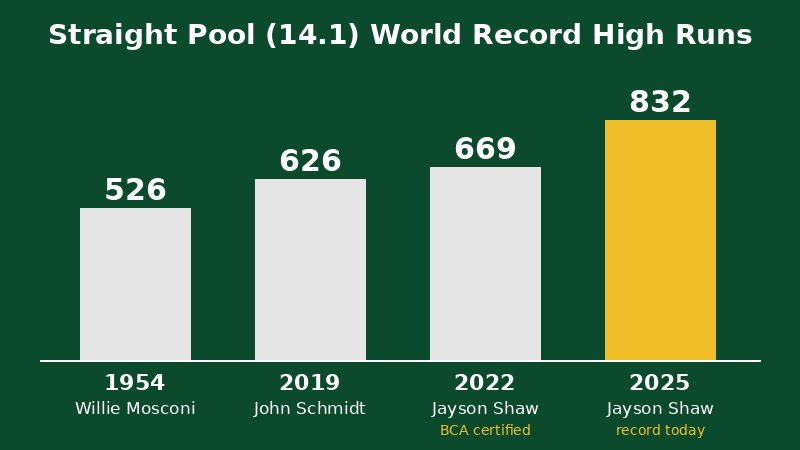
Bar chart of straight pool 14.1 world record high runs: Mosconi 526 in 1954, Schmidt 626 in 2019, Shaw 669 in 2022 and Shaw 832 in 2025

What the 14.1 World Record Runs Teach Pool Students

Quick answer: The 14.1 world record is 832 balls in a row, set by Jayson Shaw in 2025. The players who set the big records, Willie Mosconi, John Schmidt and Shaw, show us how to plan, stay calm and practice with a goal.

Bar chart of straight pool 14.1 world record high runs: Mosconi 526 in 1954, Schmidt 626 in 2019, Shaw 669 in 2022 and Shaw 832 in 2025
The straight pool record went from 526 to 626 to 669 to 832. Jayson Shaw holds it now with 832 balls. Graphic: Ted Mauro

Watch the video

Watch the straight pool record video on YouTube

What You Will Learn

  • The record numbers in one minute
  • Why planning ahead matters
  • How the pros handled pressure
  • Why practice with a goal works

The Numbers

Mosconi ran 526 in 1954. Schmidt ran 626 in 2019. Shaw’s 714 in 2022 was certified as 669, and then he ran 832 in 2025. You can read the full high run record article for all the details.

Lesson 1: Plan Ahead

In straight pool, when one ball is left, the other 14 are racked again. Every rack, the best players save a ball for the next break shot. That is just like planning your run out in 8 ball. Think three or four balls ahead.

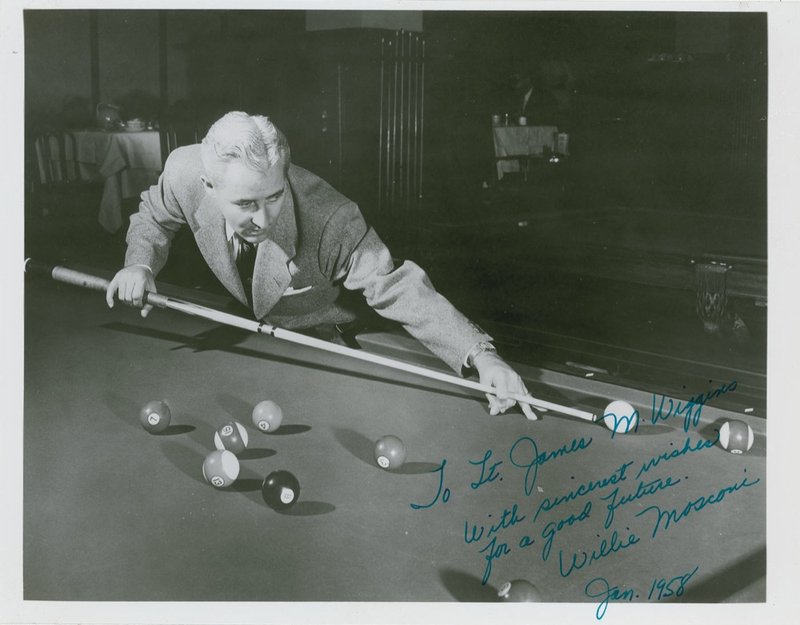
Signed vintage photo of straight pool legend Willie Mosconi shooting at the pool table, 1958
Willie Mosconi signed this photo in 1958. His 526 ball run stood as the record for 65 years. Photographer unknown. Public domain, via Wikimedia Commons

Lesson 2: Handle the Pressure

At ball 527, the ball that would break Mosconi’s record, Schmidt stopped. He put down his cue and went to the men’s room to calm down. Then he came back and made it. When you feel the pressure, step back and breathe.

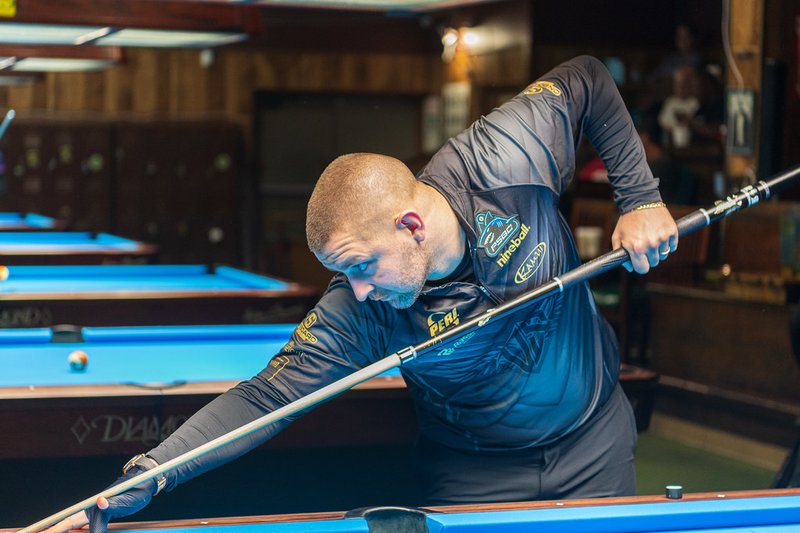
Close view of Jayson Shaw cueing a pool shot with the cue ball near the rail, 2022
Jayson Shaw gets ready to shoot in 2022. Long runs take one good shot after another. Photo: Puddin Tain via Flickr, CC BY-SA 2.0. Resized.

Lesson 3: Practice With a Goal

Shaw made 122 tries over five days before his 714 run. Even before his 832, one try ended at 278. Big runs take many tries. Pick a goal, like your best run, and chase it each time you practice.

Want more help? Start with these billiard lessons for new players.

The Bottom Line

You and I will never run 832 balls. That is fine. But we can play the easy shot, plan ahead, stay calm, and practice with a goal. Those are the same habits that built the biggest runs in pool history. Use them in your next practice and see how your own high run grows.

FAQ

What is the 14.1 world record?
832 balls, by Jayson Shaw, on January 6, 2025.

Did Mosconi miss to end his 526?
He said no. In a 1980 video, he said he quit because he got tired.

Is anyone close to 1,000?
Not yet as of October 2026. Shaw says it is his goal.

Do I need to play straight pool to use these lessons?
No. The same habits help in 8 ball and 9 ball too.

Get My Free 7 Part Fundamental Billiards Course

Sources

About the Author

I am Ted Mauro. I have played pool for over 50 years and played organized league and tournament pool for over 38 years.

Pool Drills for Beginners: 6 Easy Drills to Get Better Fast

TLDR: Drills are shots you repeat on purpose. They build skill faster than just playing. Here are six easy drills for stroke, aim, speed, and cue ball control. Keep score so you can see yourself improve.

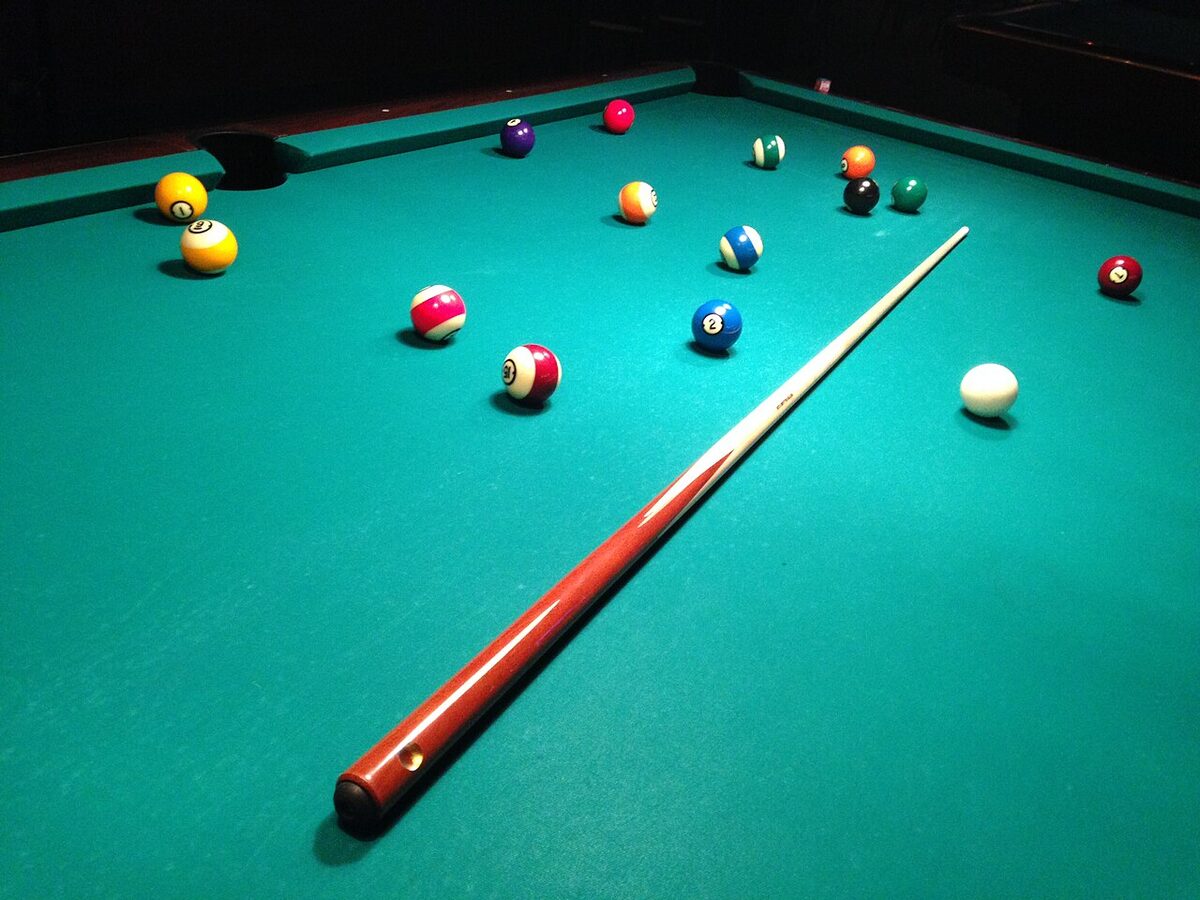
Pool drills for beginners: object balls placed on the table for a practice drill
“Billiards table 2.JPG” (CC0), via Wikimedia Commons

What you will learn:

  • Six simple drills and how to set them up
  • What each drill teaches
  • How to score yourself

I have played pool for more than 50 years and in leagues and tournaments for more than 38 years. Drills are a big part of how I still practice. They are not exciting. But they work.

Drill 1: Up and Back

Teaches: A straight stroke.

Put the cue ball on the head spot. Shoot it straight to the far rail so it comes back to your tip. If it comes back to you, your stroke is straight. If it drifts to one side, something moved. Do ten. Count how many come back straight.

Drill 2: Straight-In Shots

Teaches: Aim and stroke.

Put an object ball about a foot from a corner pocket. Put the cue ball straight behind it, about a foot back. Shoot ten. Count makes. When you make eight of ten, move the cue ball farther back.

Drill 3: The Stop Shot

Teaches: Cue ball control.

Set up a straight-in shot. Hit the cue ball a little below center with a firm stroke. The goal is for the cue ball to stop right where it hit the object ball. Score a point for each stop.

Drill 4: Speed Ladder

Teaches: Touch and speed control.

With no object balls, shoot the cue ball to the far rail. Try to have it stop near the near rail on the way back. Then try to stop it in the middle of the table. Then near the far rail. This trains your feel for speed.

Drill 5: Cut Shot Circle

Teaches: Aiming at angles.

Put an object ball near a corner pocket. Place the cue ball in five spots around it, from straight to a wide angle. Shoot each spot twice. Count makes. Do both sides of the table.

Drill 6: Three Ball Run

Teaches: Thinking ahead.

Toss three balls on the table. Take ball in hand. Try to make all three in a row. Plan where the cue ball needs to go after each shot. When it gets easy, use four balls, then five.

How to Keep Score

Bring a notebook. Write the date, the drill, and your score. Do the same drills each week. You will see your numbers go up. That keeps you going.

A Simple Practice Session

  1. Up and Back: 5 minutes
  2. Straight-In Shots: 10 minutes
  3. Stop Shot: 5 minutes
  4. Cut Shot Circle: 10 minutes
  5. Three Ball Run: 10 minutes

That is about 40 minutes. Shorter is fine, too. Doing it often is what counts.

Tips for Better Drills

  • Chalk before each shot.
  • Take your time. A drill is not a race.
  • Stay down after every shot.
  • If you get frustrated, take a short break.

More Help

I have more drills and lessons in my Pool School. You can watch me shoot them on my YouTube channel.

FAQ

How often should I do pool drills?
A few times a week is a good start. Short sessions work well.

What is the best drill for beginners?
Straight-in shots. They build aim and stroke together.

Should I drill or play games?
Do both. Drills build skill. Games teach you to use it under pressure.

How long before I see results?
Many players see better scores within a few weeks of steady drills.

Summary

These pool drills for beginners build a straight stroke, good aim, and cue ball control. Keep score, practice often, and move on to harder versions as you improve.

About the Author

I am Ted Mauro. I have played pool for more than 50 years and in leagues and tournaments for more than 38 years.