Quick answer: To break up a cluster in pool, plan it early instead of waiting until the end of the rack. The best time is while you pocket a ball, by sending the cue ball into the cluster after the shot. Choose an easy shot with a clear path for the cue ball, use only as much speed as you need, and try to hit the cluster on its edge so balls spread out instead of jamming. If you cannot break it safely, play a safety and leave your opponent the problem.
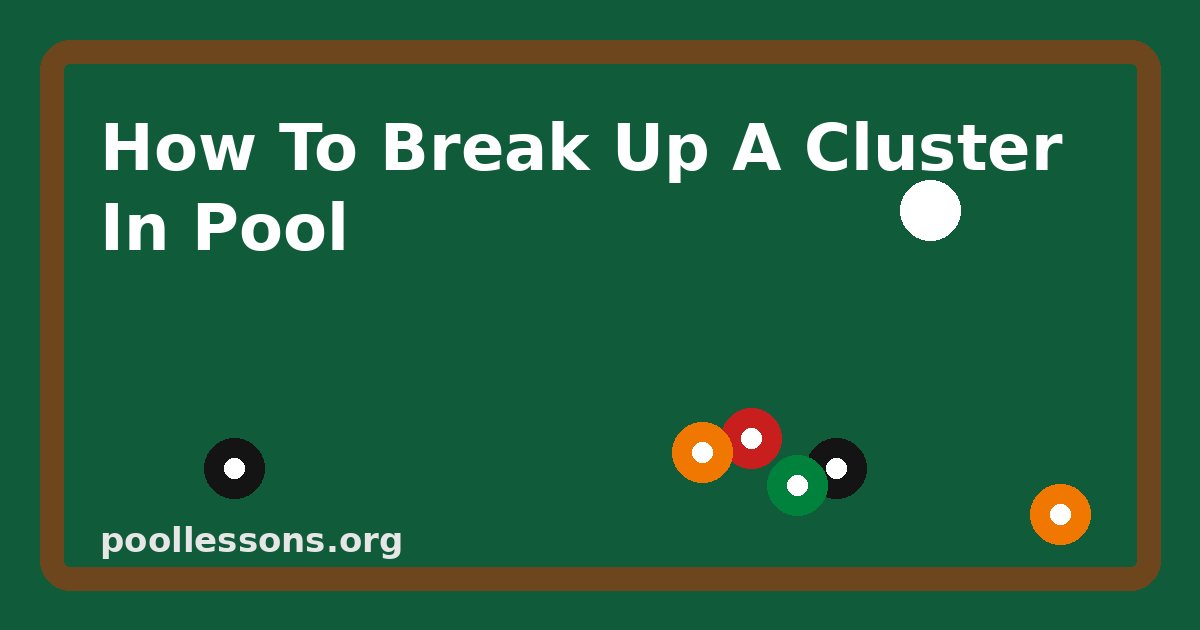
A cluster is two or more balls touching or close together that block easy shots. Breaking them up at the right time can set up a run out.
Why Clusters Matter
If one of your balls is stuck in a cluster, you may not be able to run out. Many players run a few balls, then get stuck. Planning ahead fixes this.
Step 1: Spot Clusters Early
Before your first shot, look at the whole table. Ask:
- Which balls are touching?
- Which balls have no clear path to a pocket?
- Which ball can I use to break the cluster?
Read how to plan your next shot in pool.
Step 2: Pick a Break Out Shot
The best break out shot is one where:
- The object ball is easy to make.
- The cue ball has a clear path into the cluster.
- You can control the cue ball after contact.
Step 3: Choose Your Contact Point
| Where you hit the cluster | What usually happens |
|---|---|
| The edge | Balls spread out more evenly |
| Dead center | Balls may jam or bounce back |
| A loose ball | A softer spread |
Hitting the edge of the cluster often works better than hitting it straight on.
Step 4: Use Controlled Speed
- Too soft: the cluster barely moves.
- Too hard: balls fly everywhere and the cue ball may scratch.
- Just right: enough to spread the balls a little while you keep control.
Learn more about control in how to control the cue ball in pool.
Step 5: Use Draw, Follow, or Stun
- Follow sends the cue ball forward into a cluster in front of the object ball. See how to do a stop shot in pool to learn about stun and stop first.
- Draw pulls the cue ball back into a cluster behind you. See how to draw the cue ball.
- Side spin can change the angle, but use it carefully. See how to use sidespin in pool.
Step 6: Have a Backup Plan
Before you shoot, ask: “If the balls do not spread well, will I still have a shot?” It helps to leave an easy “insurance ball” on the table that you can shoot next.
When Not to Break a Cluster
- When the break out shot is too hard.
- When your opponent’s balls might spread into easy shots for them.
- When a safety is safer.
Clusters Near the Rail
Balls frozen to the rail are a special problem. See how to shoot a frozen ball in pool and how to shoot off the rail in pool.
Using a Combination
Sometimes you can pocket a ball out of a cluster with a combo. See how to make a combination shot in pool.
Practice Drill
- Set up a small cluster of three balls.
- Set an easy shot nearby.
- Make the shot and send the cue ball into the cluster.
- Try to leave yourself a shot after the balls spread.
For more drills, see pool drills for beginners.
The Bottom Line
To break up a cluster in pool, plan early, use an easy shot to send the cue ball into the cluster, hit the edge with controlled speed, and keep an insurance ball for your next shot. If it is too risky, play a safety instead.
Keep Reading on This Site
- Why Do I Miss Long Shots in Pool? Causes and Fixes That Help
- How to Make a Jump Shot in Pool: Simple Steps for Beginners
- How to Make a Straight In Shot in Pool: 7 Simple Steps
- How to Make Thin Cut Shots in Pool: Simple Aiming and Stroke Tips
- How to Make a Combination Shot in Pool: Aim, Speed, and Drills
- How to Hit the Cue Ball in the Center: Simple Drills for Beginners
Frequently Asked Questions
What is a cluster in pool?
A cluster is two or more balls touching or close together that block easy shots.
When should I break up a cluster?
As early as you can, while pocketing an easy ball with a clear path for the cue ball.
How hard should I hit a cluster?
Use controlled speed. Enough to spread the balls, but not so hard that you lose the cue ball.
What if I cannot break a cluster safely?
Play a safety and leave the problem for your opponent.